
When does attic spray foam make sense?
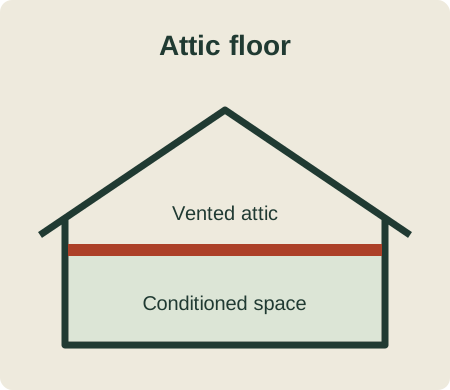
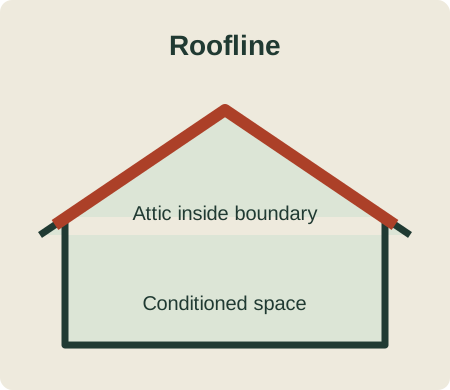
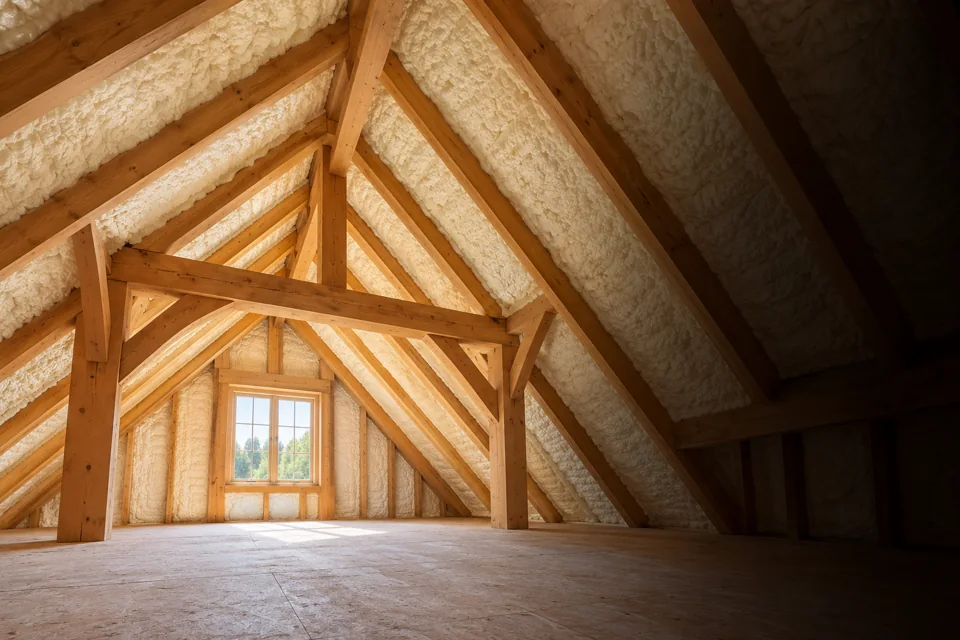
Roofline foam can bring ducts and equipment inside the conditioned envelope and turn the attic into unvented, insulated space. That conversion changes how the attic manages moisture and how the house ventilates, so it is not automatically the better choice.
Attic floor insulation keeps the existing vented arrangement and is often simpler where ducts and equipment stay outside the conditioned space. The right answer depends on roof condition, existing leaks, duct location and combustion equipment.
Both paths begin with a look at the attic, not a product pitch. If the roof already leaks or the attic has moisture staining, that comes before insulation.
What should be checked before choosing foam?
- Roof age and condition, including any active or past leaks.
- Duct location and whether equipment will sit inside or outside the insulated boundary.
- Existing attic ventilation and how the chosen assembly will manage moisture.
- Combustion equipment, chimneys and any appliance that needs combustion air.
Does the old attic insulation need to come out?
Old attic insulation does not always have to come out. Removal depends on the boundary you choose, the condition of what is there, and whether the new foam needs a clean substrate.
If removal is part of the job, the written scope should name who handles assessment, removal and disposal. Leave unidentified or potentially contaminated materials undisturbed until they have been assessed.
What belongs in the written scope?
| Project detail | What to confirm |
|---|---|
| Insulation boundary | Attic floor or roofline, and how the assembly will handle moisture and ventilation. |
| Foam product and thickness | Named product, target depth and the R-value it is expected to deliver. |
| Preparation and access | Removal of old insulation, masking, attic access, and who handles each step. |
| Protective finish | Any required covering for exposed foam, based on the product and adopted code. |
What should I prepare for a quote?
- From safely accessible areas, photograph the attic and any visible staining or other concerns. Leave roof and difficult-access inspection to the assessor.
- Measure the attic footprint if you can, and write down the intended use and the comfort problem you want to solve.
- Ask for a written scope and a written re-entry plan before work begins.
A FEW MORE ANSWERS
Questions before you get started
Can spray foam go directly on the underside of my roof deck?
It can be part of an unvented roofline assembly, but only after roof condition, leaks, moisture control and house ventilation are reviewed. Product and code requirements also apply.
Will attic spray foam stop ice dams?
Air sealing and insulation reduce one cause of ice dams, but they do not eliminate them. Roof design, ventilation and weather still matter.
How long before we can use the attic again?
Re-entry depends on the specific foam, conditions and manufacturer guidance. Ask for the written plan rather than assuming a fixed number of hours.