
Separate Air Leakage, Vapor and Bulk Water Before Insulating
- Air leakage is moving air through gaps and cracks; spray foam can help seal those paths.
- Water vapor is moisture in the air; its movement depends on the assembly and climate.
- Bulk water is a leak or intrusion; repair roof and foundation leaks before adding insulation.
- Spray foam is not waterproofing, drainage or mold treatment, and it is not a cure for mold.
- Adding foam changes drying behavior, so the sill and wall assembly need assessment.
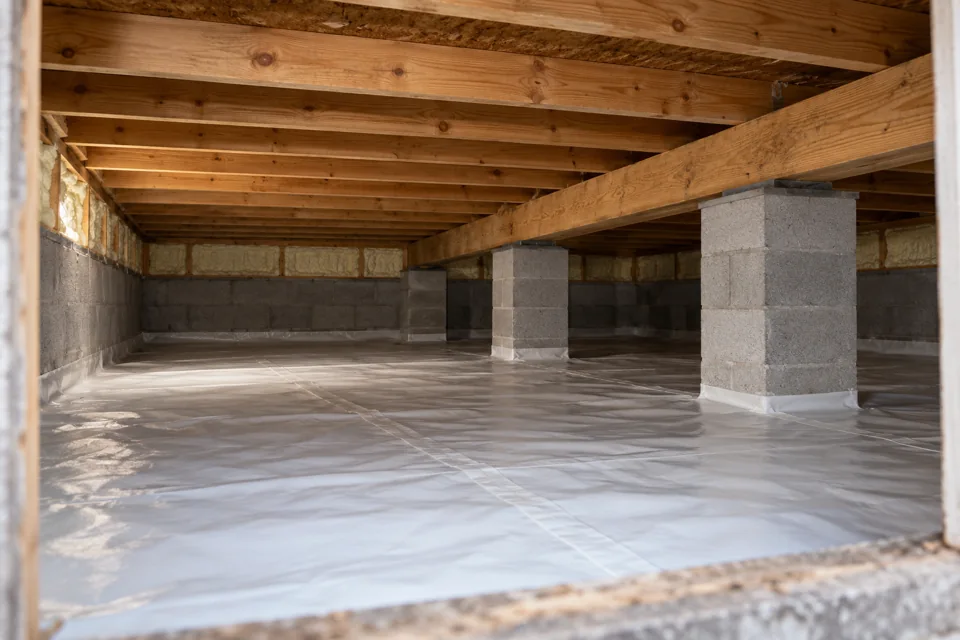
- An unvented crawlspace is a system with insulation, air sealing, ground moisture control and suitable conditioning.
- Access and pest-inspection provisions matter in crawlspace plans.
What Moisture Means for Your Insulation Project
Hybrid insulation systems need moisture-aware design in colder climates. That does not mean one product is always right or wrong.
Inspect foundation defects and resolve water intrusion before insulating. Foam does not repair drainage, rotten framing or an active foundation leak.
If a basement wall stays damp after a heavy rain, insulation is not the first repair. Fix the water source and assess the assembly before covering it.
Whole-building ventilation must remain appropriate for the space. Ask how the plan manages moisture, fresh air and drying potential.
Questions About Moisture Before You Insulate
- Has anyone identified whether the concern is air leakage, vapor or bulk water?
- Are roof, foundation or plumbing leaks repaired before insulation work?
- How will the assembly dry if it gets wet in the future?
- Does the plan include ground moisture control in a crawlspace?
- How will crawlspace access and pest inspection remain possible?
- What ventilation strategy keeps the space suitable after insulation?
- What is the next step if another trade must fix a leak first?
A FEW MORE ANSWERS
Questions before you get started
Does spray foam stop mold?
No. Spray foam is not a mold treatment or a cure for mold. Repair moisture sources first and keep ventilation appropriate for the space.
Can spray foam be used in a damp basement or crawlspace?
Inspect foundation defects and resolve water intrusion before insulating. An unvented crawlspace is a system, so ground moisture control and conditioning matter too.
Will spray foam create a vapor barrier?
Foam products differ. Closed-cell foam is generally less vapor-permeable than open-cell, but product and assembly decide suitability. Ask for a moisture-aware design.