
Open-cell and closed-cell at a glance
| Consideration | Open-cell | Closed-cell |
|---|---|---|
| Thermal resistance per inch | Lower per inch | Generally higher per inch |
| Vapor behavior | More vapor-permeable | Less vapor-permeable |
| Space required | Needs more depth for a target R-value | Fits more R-value into less depth |
| Selection question | Does the assembly have enough depth and an appropriate drying plan? | Does the assembly need more R-value per inch and less vapor transmission? |
Choose for the space you have
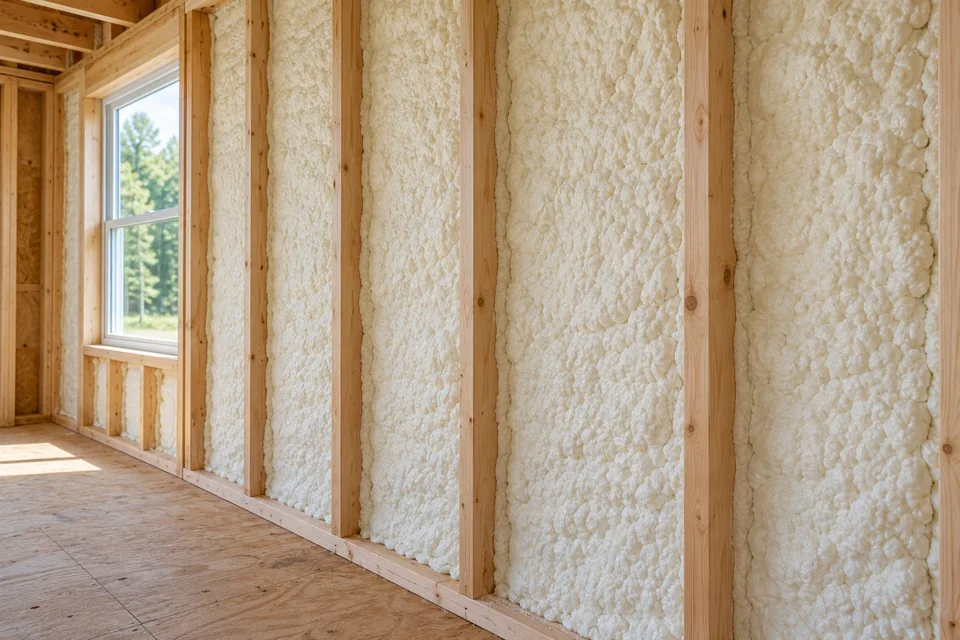
Material choice follows the assembly. A rim joist, a compact wall cavity and an attic floor with generous depth each point toward different products, because each has different space, vapor and insulation targets.
For example, a shallow cavity can make higher R-value per inch useful. A deeper cavity offers more room to compare products, but depth alone does not decide the choice: vapor control and the complete assembly still matter.
Neither product fixes a wet assembly, and neither should be chosen from a price per inch alone. Start with the space and the result you want, then let the product follow.
What should I ask before agreeing to work?
- Which product is specified, and what R-value per inch does its published data show?
- How does the assembly handle vapor and drying in a cold climate?
- What thickness is planned, and how does that fit the available cavity or depth?
- What protective covering is required, if any, for exposed foam?
- What preparation, masking and cleanup are included in the written price?
A FEW MORE ANSWERS
Questions before you get started
Is closed-cell always better than open-cell?
No. Closed-cell generally provides more R-value per inch, but open-cell is more vapor-permeable and can suit deeper interior cavities. The assembly and moisture path decide.
Is the foam name enough to compare bids?
No. Compare the actual product, specified depth or performance, surfaces, preparation and protective finish. Two bids labelled spray foam may describe very different work.
Which one costs less?
Neither has a universal price. Material, thickness, preparation and access change the number, and spray foam generally costs more than fiberglass or cellulose. Compare written estimates for the same scope.