
Where closed-cell foam makes practical sense
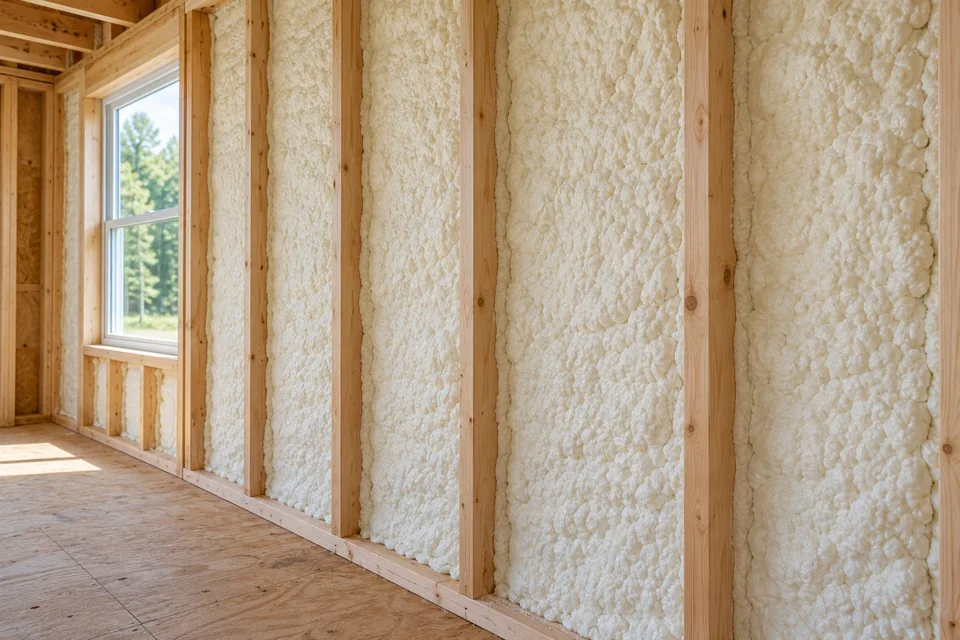
Closed-cell foam is denser and generally supplies more thermal resistance per inch than open-cell foam. It also has less vapor permeance, which can matter in certain assemblies.
Those traits do not make it universally better. Application, thickness, and product decide suitability, and closed-cell foam is not a waterproofing system or a structural guarantee.
Four checks before choosing closed-cell
- Identify the assembly and substratewall, rim joist, roofline, crawlspace, or another area, because each has different moisture and access conditions.
- Confirm the target performance and available depth, since the product’s R per inch and installed thickness work together.
- Review moisture control and ventilation, especially if the project combines foam with other insulation in a colder-climate assembly.
- Check protective barrier requirements for the occupancy and adopted code, because foam is combustible and coverings vary.
Closed-cell scope details to put in writing
| Project detail | What to confirm |
|---|---|
| Product and thickness | The named closed-cell product, intended thickness, and published thermal and vapor properties used for the design. |
| Assembly and area | Which surfaces are included, how area is measured, and whether any removal, masking, or surface prep is included. |
| Moisture strategy | How the assembly manages moisture and ventilation, including any hybrid insulation or vapor-control details. |
| Protective finish | Required barrier or covering, who installs it, and how it will be inspected before final acceptance. |
Three steps toward a closed-cell quote
- List the spaces you want priced and note whether they are open, finished, damp, or difficult to access.
- Tell the estimator your target result, such as a warmer room, a sealed rim area, or a specific assembly, without trying to prescribe thickness.
- Ask the written quote to name the foam product, thickness, preparation, access, and protective finish.
A FEW MORE ANSWERS
Questions before you get started
Is closed-cell foam waterproof?
No. Closed-cell foam has less vapor permeance than open-cell in general, but it is not a waterproofing system or structural repair. Water entry and drainage need separate assessment.
Does every closed-cell product perform the same?
No. Ask for the named product’s technical data, specified thickness and approval for the planned assembly. Thermal resistance and vapor properties should be checked against that information.
Can closed-cell foam be left exposed?
Not as a blanket answer. Foam is combustible, and required protective barriers depend on assembly, product approval, occupancy, and adopted code. Ask what your project requires.