
Where open-cell foam fits best
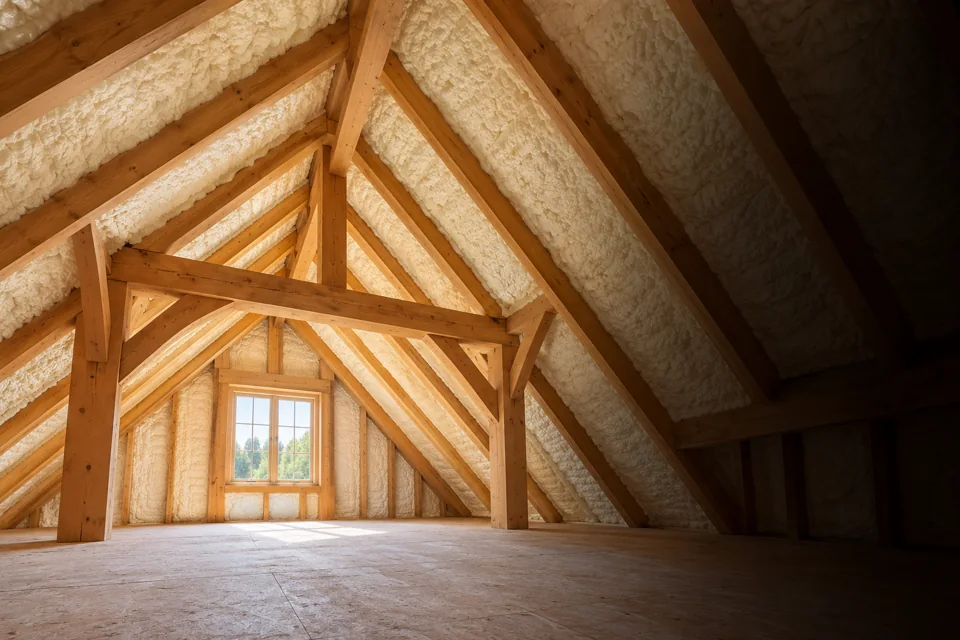
Open-cell foam is lower density and more vapor-permeable than closed-cell foam. It can insulate and air-seal, but it needs sufficient space to reach the specified performance.
Because it is vapor-open, the assembly and moisture plan matter. Open-cell foam is not automatically the right choice for every attic, and it is not a guaranteed soundproofing solution.
Four checks before choosing open-cell
- Decide which assembly needs insulation and how much depth is available, since open-cell foam generally needs more thickness than closed-cell for the same thermal target.
- Review moisture control and ventilation, especially in colder-climate hybrid systems or vented attic plans.
- Confirm whether the product and assembly allow the intended use, because open-cell foam is not automatically suited to every attic or roofline.
- Check protective barrier requirements, since foam is combustible and coverings depend on occupancy and code.
Open-cell scope details to confirm in writing
| Project detail | What to confirm |
|---|---|
| Product and thickness | Named open-cell product, target thickness, and published thermal properties for the specified assembly. |
| Available depth | Whether framing, ducts and finish details leave room for the specified thickness, including how excess material and interior finishes will be handled. |
| Moisture and ventilation | How the assembly will manage vapor and air movement, including any hybrid or venting details. |
| Protective finish | Required barrier or covering, installation responsibility, and inspection sequence. |
Three steps toward an open-cell quote
- Describe the space and how you use it, including whether it is finished, vented, damp, or hard to reach.
- Share approximate dimensions if you know them, or clear access notes if you do not.
- Ask for the written scope to name product, thickness, prep, access, and the protective finish.
A FEW MORE ANSWERS
Questions before you get started
Does open-cell foam need more thickness than closed-cell?
Generally, yes. Closed-cell foam supplies more thermal resistance per inch, while open-cell foam usually needs more depth for the same target. Product data and assembly details control the final choice.
Is open-cell foam a soundproofing treatment?
It is often discussed for sound, but it is not automatically a soundproofing solution. Sound control depends on the whole assembly and the specific goal.
Can open-cell foam be used in a vented attic?
That depends on the assembly and moisture plan. A vented attic, roofline, or hybrid approach needs review before choosing thickness or placement.