
Plan the whole crawl space
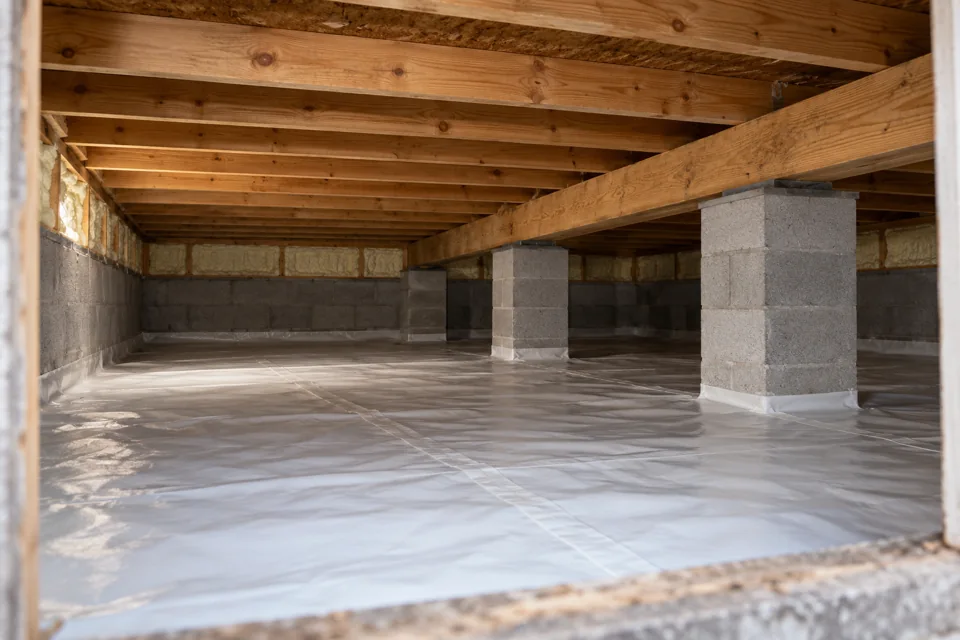
An unvented crawl space is a system: insulation, air sealing, ground moisture control and suitable conditioning work together. Spray foam can insulate and air-seal the assembly, but it should not be sold as complete encapsulation, drainage work or pest treatment.
Ask about access, standing water, vents, ground cover and how the space will be conditioned. If the crawl space stays wet or has structural or pest problems, those need separate attention before insulation performance can be judged fairly.
Check moisture and access first
- Water and ground moisturelook for damp soil, efflorescence, sump activity or active seepage. Foam over a wet assembly is not a substitute for ground moisture control.
- Access and working clearancenote hatch size, height, ducts, pipes and whether a person and equipment can reach the far corners without disturbing stored items.
- Intended conditioned boundarydecide whether the crawl space will be inside or outside the home's pressure and thermal boundary. That choice drives where insulation belongs.
- Pest inspection and future service accessconfirm the plan leaves a practical way to inspect for termites or other pests, because covering the whole floor or foundation changes access.
What a Crawl Space Foam Scope Should Itemize
| Project detail | What to confirm |
|---|---|
| Foam product and thickness | The exact product name, open-cell or closed-cell, target thickness and where each is planned. One product's published properties do not apply to every foam. |
| Prep, access and removal | Whether old insulation, debris or vapor barrier materials will be removed, how the crew will enter, and what masking or protection is included. |
| Moisture and ground treatment | What happens with ground cover, drainage, vents and conditioning. Insulation is not a substitute for controlling bulk water. |
| Protective finish and inspection | Whether exposed foam needs a protective barrier under the adopted code, and how future pest or foundation inspection can still occur. |
How to Prepare a Useful Crawl Space Estimate Request
When you request an estimate, ask for the product name, thickness, prep, access, moisture work and protective finish in writing.
- From safely accessible areas, photograph the access hatch and a few wide views of the crawl space, including any damp spots, vents, pipes or debris. Photos help an estimator judge access before visiting.
- Write down the symptoms you care aboutcold floors, high humidity, musty odor or ice on pipes. Mention whether the crawl space is vented and how it is currently used.
- Share rough dimensions if you have them, plus any known water history or previous encapsulation work. Ask for the written preparation and re-entry plan before work begins.
A FEW MORE ANSWERS
Questions before you get started
Can spray foam encapsulate my crawl space by itself?
No. Encapsulation involves ground moisture control, drainage, air sealing, suitable conditioning and access. Foam can insulate and air-seal, but it is one part of that system.
Do I need to fix a wet crawl space first?
Water intrusion and ground moisture need to be resolved before insulation performance can be fairly judged. Foam does not replace drainage, ground cover or pest treatment.
What should the written estimate include?
It should name the foam product, thickness, areas, prep, removal, masking, access and protective finish. Price variables include area, foam type, depth, removal, masking and access, and the final number should follow a site visit.