
Walls, rim joists and water control
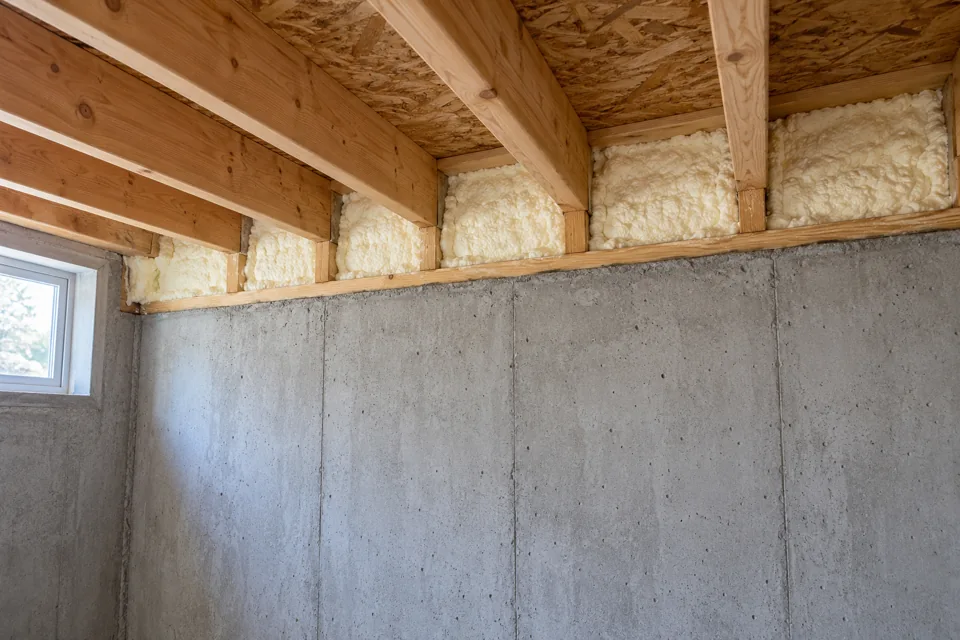
Basement wall insulation is different from rim joist insulation. Spray foam can insulate and air-seal walls or the perimeter band, but foundation defects and active water intrusion should be resolved before foam is installed.
Adding foam changes how the assembly dries. Assess the sill, wall and floor junction, and decide how exposed foam will be protected. Foam does not repair drainage, rotten framing or an active foundation leak.
Inspect the foundation before covering it
- Water historylook for damp walls, efflorescence, peeling paint, sump activity or seepage after rain. Active leaks need repair before insulation.
- Foundation conditionnote cracks, bowing, mortar deterioration or prior patching. Structural repairs are a separate trade and should not be covered up with foam.
- Insulation locationdecide whether the plan targets basement walls, rim joists or both. These are distinct locations with different access and finishes.
- Drying and protectionask how the wall assembly will manage moisture and how exposed foam will be covered if the adopted code or product approval requires a barrier.
What a Basement Foam Scope Should Itemize
| Project detail | What to confirm |
|---|---|
| Wall vs rim joist scope | Which surfaces are included: full wall, partial wall, rim joists or a combination. The estimate should show each area separately. |
| Product and thickness | Exact foam product, open-cell or closed-cell, and target thickness. Product-specific published properties do not apply to every foam. |
| Water and prep work | What happens with leaks, crack repair, sump, drainage, old insulation removal, masking and access. Foam is not a waterproofing system. |
| Protective finish | Whether exposed foam needs an approved protective barrier under the adopted code, and what finish work is included. |
How to Prepare a Useful Basement Estimate Request
Ask for a written scope that separates wall insulation, rim joist insulation, water repair and protective finish.
- Take photos of damp spots, cracks, sump, pipes and the wall-to-floor junction. Include a wide view of access stairs and headroom.
- Note how you want to use the basementfinished room, storage, laundry or mechanical space. Intended use affects the boundary and finish plan.
- List any known leaks, prior waterproofing or foundation work. Ask how the plan will protect exposed foam and preserve drying behavior.
A FEW MORE ANSWERS
Questions before you get started
Will basement foam stop water?
No. Foam is insulation and air sealing. Drainage, waterproofing and foundation repairs are separate. Active leaks should be fixed before foam is installed.
Should I insulate walls or rim joists?
They are distinct insulation locations. Rim joists address the perimeter band; walls address the larger below-grade surface. An estimate should clarify which areas are included.
Does exposed foam need covering?
It depends on product approval, assembly, occupancy and adopted code. Foam is combustible, so ask what protective barrier is required for your basement.