
Air Sealing, Access and Cost: How the Options Compare
| Option | What it does well | What to separate in the quote |
|---|---|---|
| Spray foam | Can insulate and air-seal in one material; product and assembly decide suitability. | Review foam type, substrate, moisture plan and finish. |
| Fiberglass | Common insulation in batt or blown form; installation access varies. | Separate insulation value from air-sealing work. |
| Cellulose | Blown insulation with different access and density by application. | Ask how air sealing is handled separately. |
What Changes When You Compare Foam with Fiberglass or Cellulose
SPFA describes spray foam insulation as generally costing more than fiberglass or cellulose. Local written estimates are still needed because installed prices vary by scope and site.
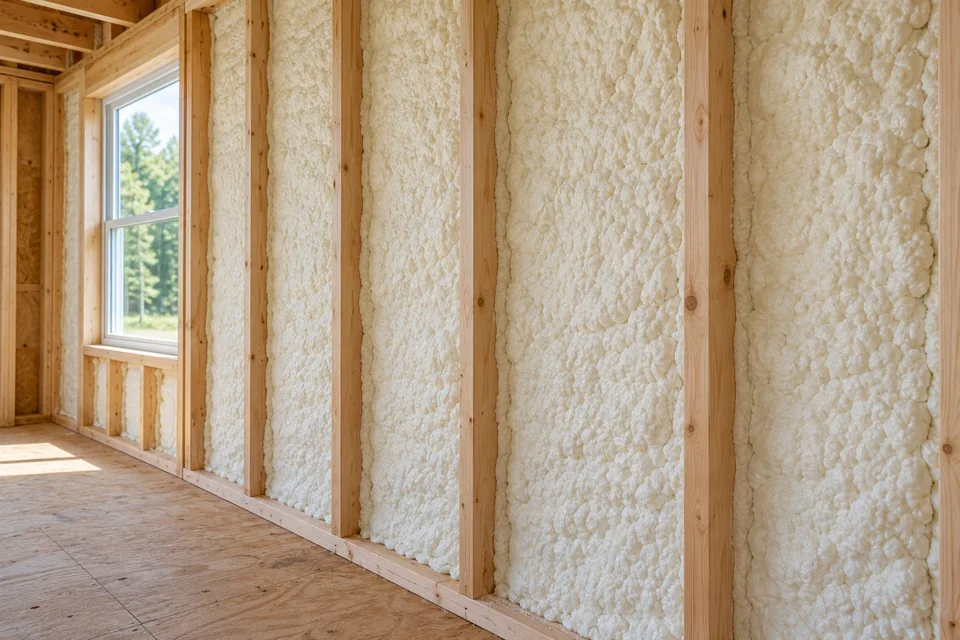
Spray foam can insulate and air-seal, but product and assembly decide suitability. Fiberglass and cellulose are insulation materials, not automatically complete air barriers.
Hybrid systems need moisture-aware design in colder climates. If an older wall cavity already has fiberglass, adding foam at air-sealing points may help, but the moisture plan comes first.
No material deserves a blanket dismissal. Compare access, drying behavior, ventilation and the written assembly before choosing.
Questions for Any Insulation Comparison
- What problem are we solvingheat loss, air leakage, moisture or comfort?
- Which material fits the cavity, substrate and access without hidden prep costs?
- If we combine materials, who designs the moisture and ventilation plan?
- Does the quote name the product, thickness and air-sealing scope in writing?
- What work is excluded, such as sealing, venting or repair?
- How will the installer verify coverage before finishing?
- What is the next step if another trade must correct a moisture issue first?
A FEW MORE ANSWERS
Questions before you get started
Is spray foam always better than fiberglass or cellulose?
No. Spray foam can insulate and air-seal, but product and assembly decide suitability. Fiberglass and cellulose can be appropriate when the assembly and air-sealing plan match.
Can I mix spray foam with existing insulation?
Hybrid systems need moisture-aware design in colder climates. Ask who will define the moisture and ventilation plan before adding foam to an existing assembly.
Why does spray foam cost more?
SPFA describes spray foam as generally costing more than fiberglass or cellulose. The exact difference depends on the product, preparation, access and written scope, so request local estimates.