
Start With How the Space Will Be Used
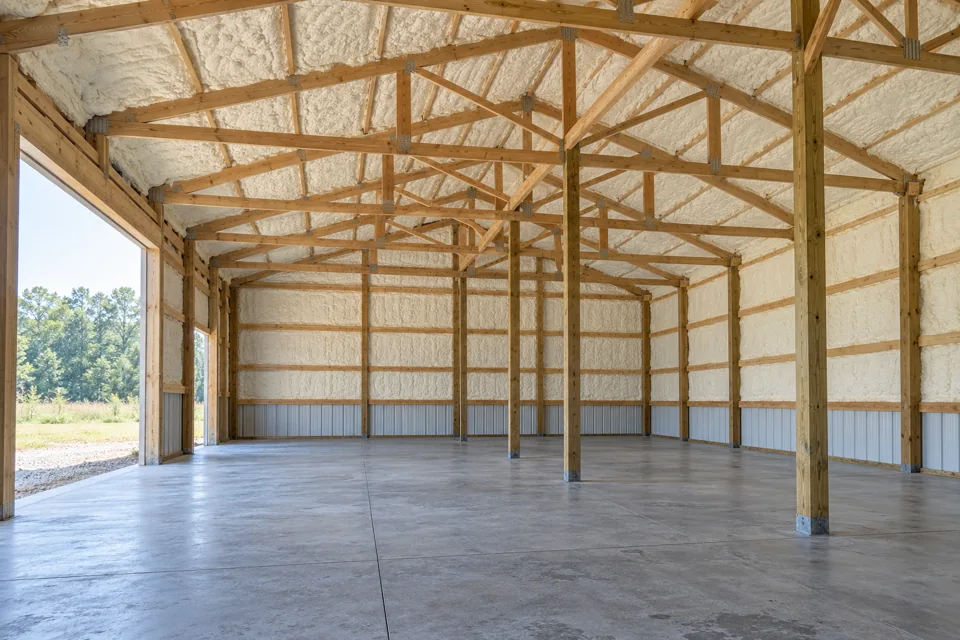
If you are turning a Middlebury pole barn bay into a heated workshop, the first decision is not foam type. It is how much of the building you will condition, how you will use it, and whether the assembly can handle insulation and air sealing.
An existing room that feels drafty may need a different scope than a new addition. A contractor should look at the substrate, access, moisture signs, and the way the space is heated before recommending open-cell or closed-cell foam.
Match the Application to the Project
- Pole barn or workshopUse this path when you want a more usable, comfortable work area; the plan must fit the building substrate and intended use.
- Attic or rooflineA different application is right when the goal is a conditioned attic or a changed roof assembly. Roof-deck foam turns an attic into an unvented assembly, so leaks, roof condition, moisture control, and house ventilation need review first.
- Open-cell versus closed-cellBoth can insulate and air-seal. Closed-cell generally provides more thermal resistance per inch, while open-cell is more vapor-permeable; product and assembly decide suitability.
Where Middlebury Projects Check Local Requirements
Middlebury's published code assigns building-code administration to Elkhart County and uses county planning bodies, while the Town Council retains specified functions. A new home, addition, or converted workspace should be routed to county building resources, and the town land-use or site obligations should be checked as well.
Ask how the space will be occupied and heated, not only its floor area. That detail helps the reviewer and the contractor match the insulation scope to the actual use.
Not every insulation change follows the same permit path. Confirm the property jurisdiction and the specific project requirements before work begins.
Middlebury Code section 152.04: County Building Department and Building Standards ↗Middlebury Code section 152.03: Planning and Zoning Law ↗Elkhart County Planning and Development: Building ↗Details That Make an Estimate More Useful
- Property address and town, so the contractor can confirm jurisdiction and access.
- Intended use of the spaceworkshop, living area, storage, or commercial.
- Surfaces to be insulatedwalls, attic floor, roofline, rim area, crawlspace, or garage.
- Access details such as attic hatch, crawlspace opening, driveway, and whether equipment can reach the work zone.
- Current insulation, visible water, pest activity, or ventilation concerns.
- Preferred project timing and any renovation or access deadlines.
A FEW MORE ANSWERS
Questions before you get started
Does every Middlebury insulation project need a town permit?
Middlebury's code routes building-code administration to Elkhart County, but that does not mean every insulation change follows the same review path. Check the property jurisdiction and ask the county building resource what applies to your specific scope.
Should I choose open-cell or closed-cell foam for a workshop?
It depends on the building assembly, how the shop will be heated, and whether the space will be conditioned year-round. Both foam types can insulate and air-seal; closed-cell generally offers more thermal resistance per inch, and open-cell is more vapor-permeable.
Can I stay in the house during spray foam work?
The work area needs isolation and planned ventilation during application and cleanup. Return timing depends on the specific foam, conditions, and manufacturer guidance, so ask the contractor for a written isolation and return plan before the project.